
From Beats to Broadcast: How Kids Learn Audio Engineering at Sound Club
From Beats to Broadcast: How Kids Learn Audio Engineering at Sound Club
Music today is more than melodies and lyrics – it’s production, sound design, recording, and mixing. Behind every song, podcast, film score, and viral video is audio engineering at work. At Sound Club, kids and teens don’t just listen to music – they learn how it’s made, shaped, and brought to life.
For parents looking for audio engineering for kids or a modern sound production school, Sound Club offers a hands-on, creative path that takes students from their first beat all the way to polished, broadcast-ready sound.
WHAT IS AUDIO ENGINEERING & WHY START YOUNG?
Audio engineering is the art and science of sound. It includes recording instruments and vocals, shaping tone, balancing levels, and mixing tracks so they sound clear, powerful, and professional. While it may sound complex, kids are more capable of learning these skills than many people realize – especially when the process is broken down in a fun, approachable way.
At Sound Club, we believe that learning audio engineering early builds both technical confidence and creative curiosity. Kids already interact with sound every day through music, games, videos, and social media. Teaching them how sound works gives them a deeper understanding of the media they love – and empowers them to create their own.

FROM BEATS TO BIG PICTURE: HOW OUR CURRICULUM WORKS
Our curriculum is designed to guide students step by step, regardless of experience level. Whether a student is brand new or already experimenting at home, we meet them where they are and help them grow.
Step 1: Building Beats and Musical Foundations
Most students begin with beat-making and basic music production. This stage introduces rhythm, tempo, structure, and layering — the building blocks of modern music. Using tools like Logic Pro, GarageBand, and Ableton, students create drum patterns, bass lines, and melodies while learning how different sounds work together.
This phase sparks creativity and keeps students engaged. They’re not just learning concepts — they’re making something real from day one.
Step 2: Recording Instruments and Vocals
Once students understand how tracks are built, they move into recording. They learn how microphones work, how to capture clean sound, and how to record vocals or instruments with clarity and intention.
This is where audio engineering begins to come alive. Students hear the difference between raw and refined sound and start to understand the importance of technique, environment, and attention to detail.
Step 3: Editing, Mixing, and Sound Design
After recording, students learn how to edit and mix their tracks. They explore EQ, compression, reverb, and effects — all core elements of audio engineering for beginners. These tools allow students to shape sound, fix imperfections, and bring balance and depth to their projects.
By breaking complex concepts into simple, hands-on lessons, Sound Club makes professional-level skills accessible and exciting for kids and teens.
LEARNING WITH INDUSTRY-STANDARD TOOLS
One of the things that sets Sound Club apart as a sound production school is our use of real-world tools. Students work with the same software used by professional producers, engineers, and artists around the world.
Programs like Logic Pro and Ableton give students a genuine understanding of modern audio workflows. They’re not learning on simplified or outdated systems – they’re gaining skills that translate directly to real-life music and media production.
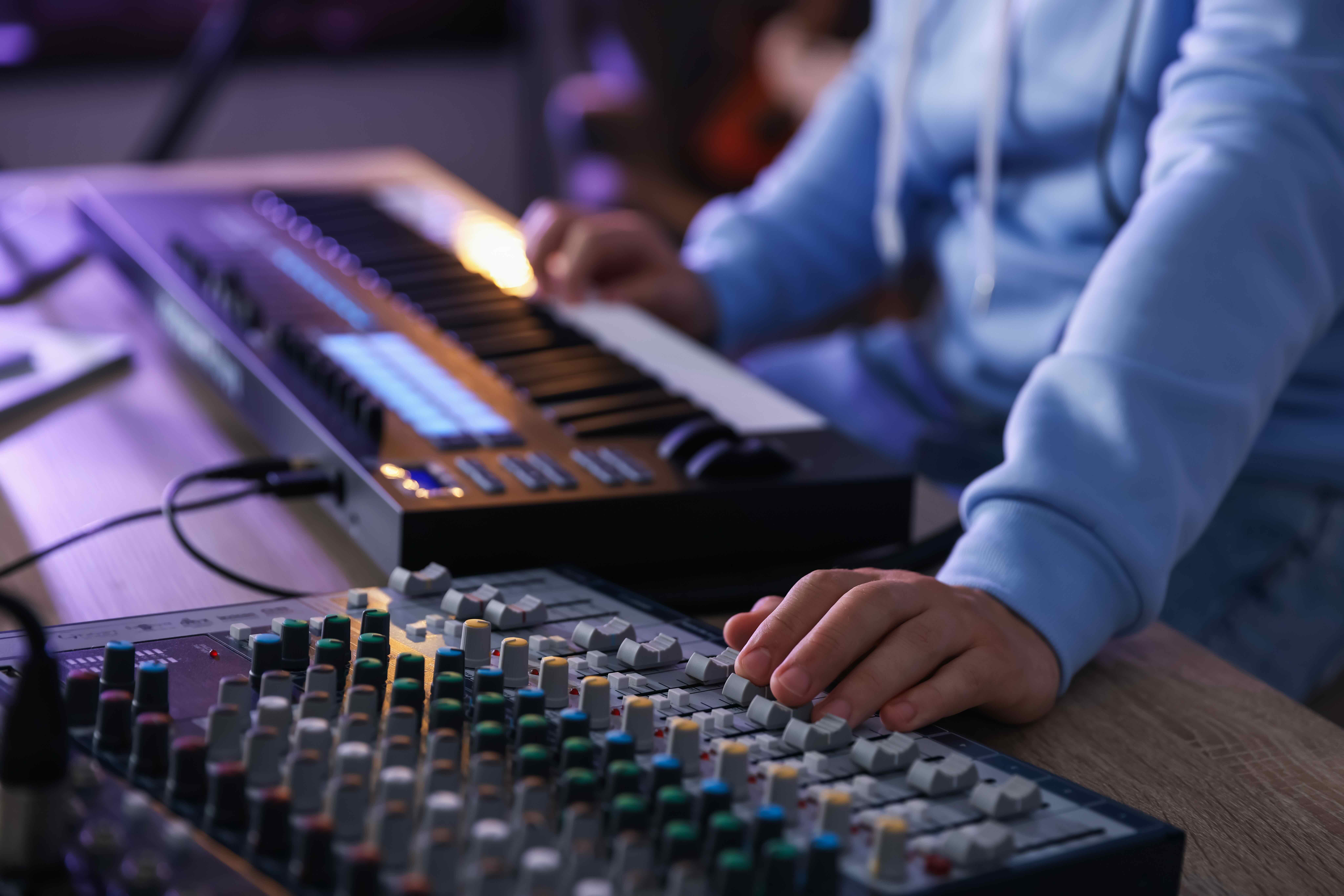
This exposure builds confidence and prepares students for future opportunities, whether they pursue music seriously or simply enjoy creating as a hobby.
MAKING COMPLEX CONCEPTS FUN & ACCESSIBLE
Audio engineering can sound intimidating, but at Sound Club, we focus on clarity, creativity, and encouragement. Lessons are structured to be engaging, interactive, and age-appropriate.
We use real examples, visual demonstrations, and hands-on experimentation to help students understand concepts like signal flow, sound balance, and effects processing. There’s no pressure to be perfect — the goal is exploration, understanding, and growth.
This approach helps students feel capable and supported, even when learning technical material. Over time, they begin to speak the language of sound with confidence.
REAL GROWTH, REAL CONFIDENCE
One of the most rewarding parts of teaching audio engineering is watching students grow. Many start out unsure of themselves, curious but hesitant. As they learn how to shape sound and hear their work improve, their confidence skyrockets.
Students take pride in sharing their tracks with family and friends. They begin to listen to music differently, noticing details they never heard before. Some discover a passion for mixing, others for recording, and others for production as a whole.
For teens especially, music production and audio engineering can be a powerful outlet — a way to express emotions, tell stories, and connect with others through sound.
AUDIO ENGINEERING SKILLS THAT EXTEND BEYOND MUSIC
Learning audio engineering isn’t just about music. The skills students develop at Sound Club are valuable across many creative and technical fields.
Students gain experience with:
- Technology and software navigation
- Critical listening and attention to detail
- Problem-solving and troubleshooting
- Creative collaboration
- Project-based thinking
These skills support success in media, film, gaming, podcasting, content creation, and even STEM-related paths. For parents exploring music production for teens, audio engineering offers both creative fulfillment and practical skill-building.
A MODERN MUSIC SCHOOL BUILT FOR TODAY’S KIDS
Sound Club was created with modern families in mind. We understand that kids learn best when they’re excited, supported, and challenged in the right ways. Our environment is welcoming, inclusive, and focused on progress – not pressure.
By combining creativity with structure and technology with expression, Sound Club delivers a music education that feels relevant and inspiring. We don’t just teach kids how to use tools – we teach them how to think creatively, listen critically, and trust their ideas.
FROM THE STUDIO TO THE WORLD
When students complete a project at Sound Club, they’ve done more than make a song – they’ve learned the process behind professional sound creation. From beats to recording to mixing, they’ve experienced the full journey of audio engineering.
For parents searching for audio engineering for kids or a hands-on sound production school, Sound Club offers a unique opportunity: a place where complex concepts are made approachable, creativity is encouraged, and kids learn skills that will stay with them for life.
At Sound Club, sound isn’t just heard – it’s explored, shaped, and shared.
One Comment
Comments are closed.
Sed magna purus, fermentum eu, tincidunt eu, varius ut, felis. Praesent congue erat at massa. Phasellus tempus. Sed magna purus, fermentum eu, tincidunt eu, varius ut, felis. Integer tincidunt.